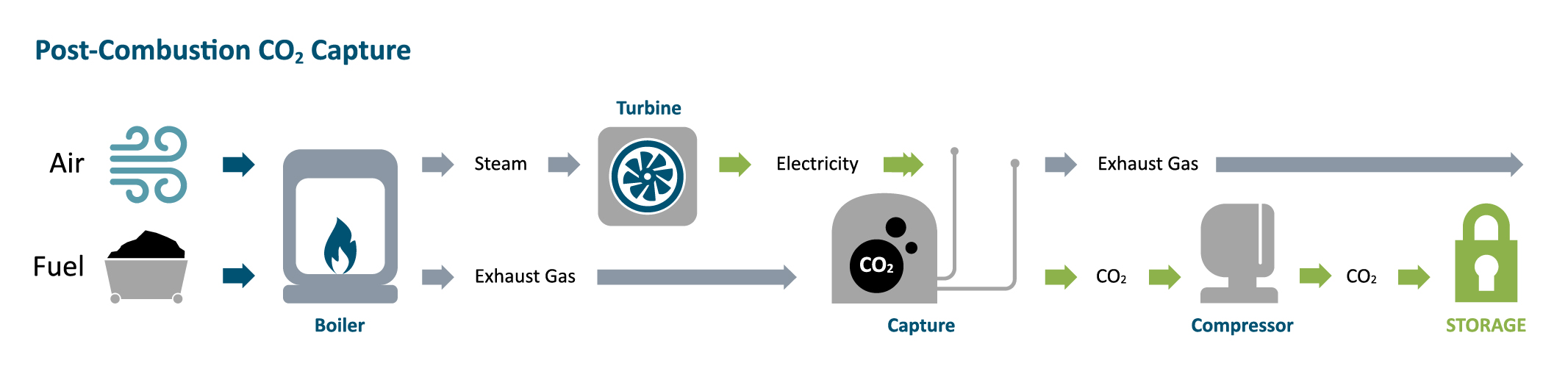
Carbon capture and storage (CCS) is an innovative technology with immense potential to significantly reduce greenhouse gas emissions. By capturing CO2 from industrial processes and power generation and securely storing it underground, CCS offers a powerful solution for mitigating climate change.
One of the key aspects of CCS is its ability to address emissions from large industrial sources such as power plants and cement factories. While the initial costs of CCS can be high, especially for smaller facilities, the technology is becoming more economically viable with the support of government incentives like tax credits and subsidies. These financial aids are crucial in making CCS a more attractive investment for companies.

Technically, CCS involves sophisticated processes to capture and store CO2. Ensuring the integrity of storage sites is paramount to prevent leaks and protect both the environment and human health. Advances in materials science are helping to mitigate issues like corrosion and degradation, making the technology more reliable and efficient.
The storage capacity of underground geological formations such as former oil and gas reservoirs has been proven over millions of years. Identifying and assessing suitable storage sites is a meticulous process but it ensures that CO2 can be stored safely and effectively. While some sites may be remote, the development of a robust pipeline network can facilitate the transport of captured CO2, making the entire system more efficient.
Public perception also plays a significant role in the adoption of CCS. Critics raise concerns about the safety and effectiveness of CCS. Governments and regulatory bodies are playing a pivotal role in this transition by funding and incentivizing CCS projects. This policy support is essential for overcoming initial challenges and scaling up the technology.
To enable these funding models to work, the challenges of measuring the stored CO2 need to be addressed. There will be two elements to any charging regime, firstly the need to measure the bulk fluid quantity of Rich Stream CO2 so that the transport and storage company can be paid for their services and secondly to determine the concentration of the CO2 being stored so that the regulatory body can create the balancing tax credit.
Despite the challenges related to cost, technical complexities, storage capacity and public perception, CCS holds great promise as a key tool in the fight against climate change. Continued innovation and investment are essential to unlock the full potential of CCS, making it a cornerstone of global efforts to reduce greenhouse gas emissions and protect our planet for future generations.
For more information on CCS please click here or contact Chris Waller
